Books
The Gentle Art | God’s Foolishness | Words Before Dawn
Not Till We are Lost | Birds of Hoboken
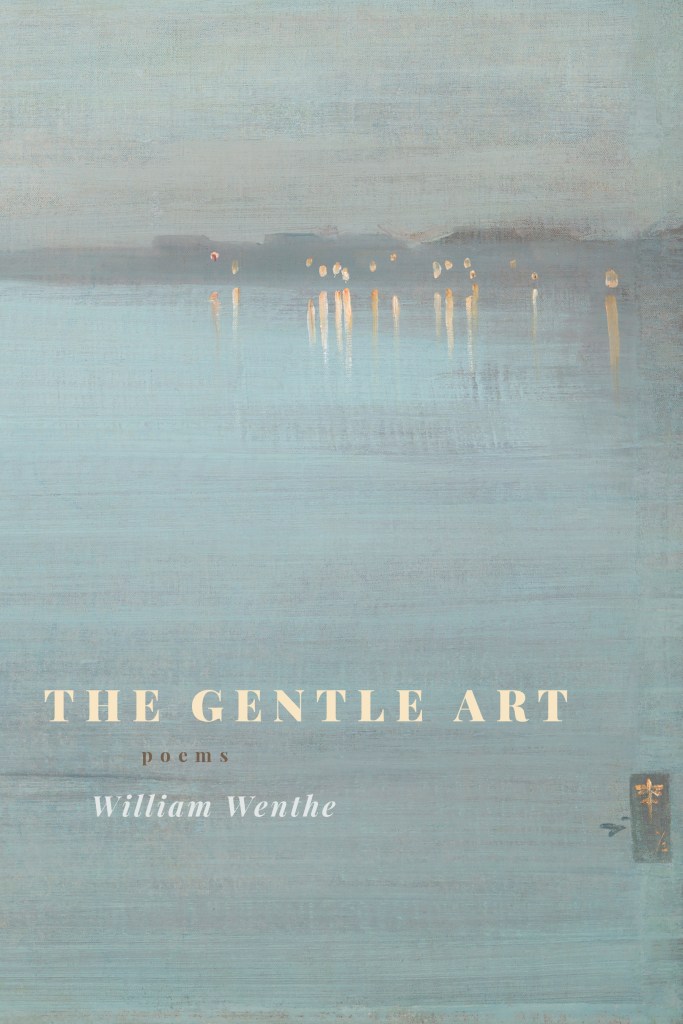
“The Gentle Art retraces the career and life of the great artist James McNeill Whistler while simultaneously recounting the author’s own journey through life as a poet, overlaying “period” scenes with episodes from his own narrative, so that they illuminate each other in remarkable ways. Over the course of the book, we witness, and experience for ourselves, the evolution of Wenthe’s feelings about his gifted, complicated, and sometimes infuriating subject. These feelings becomes more acute, and more personal to the speaker, as he struggles with his increasingly troubled marriage and his concern for his daughter’s wellbeing under these trying circumstances. How does one balance the demands of art with those of life? Can one remain true to one’s personal vision as well as to loved ones? Wenthe’s attempt to answer these difficult questions is what makes this book so compelling.”
—Jeffrey Harrison
“Not only does Wenthe pursue, with a detective’s vigor, a biographer’s diligence, and a poet’s spellbinding wizardry, the human and artistic enigma of Whistler, her likewise investigates crucial elements of trailblazing Whistler’s triumphs and travails to illuminate aspects of his own life experiences—in questing and distinctive fasion. In this allusive and deftly braided book . . . Wenthe consistently moves beyond mere ekphrasis to empathy, identification, and revelation.”
—Cyrus Cassells
“William Wenthe’s moving and skillful engagement with James McNeill Whistler’s life and art becomes an occasion for the poet to meditate on his own. Deft formal poems (sestina, sonnet, terza rima, ottava rima ) pay tribute to Whistler’s mastery; trial accounts, anecdotes, snippets from journals and letters offer a surprisingly ample account of the artist’s imperfect life. And through all of it, we have Wenthe: looking, living, researching, traveling and writing poems, which like his subject’s Nocturnes, ‘reveal / unintended presences’ and ’tilt the city, slightly, from its frame.’ “
—Jacqueline Osherow
“Poised somewhere between Whistler’s comment, “Art happens,” and Rilke’s directive, “You must change your life,” The Gentle Art brilliantly encompasses the wry and the sublime. In poems that move between biography and autobiography, art and experience, sorrow and ecstasy, William Wenthe’s ekphrasis is far from the usual descriptive work that defines the ekphrastic mode. Instead, Wenthe is engaged in a startling fusion wherein the painter and the poet become mirror-like illuminations of each other. The Gentle Art is painful, gorgeous, and wise.”
—Rick Barot
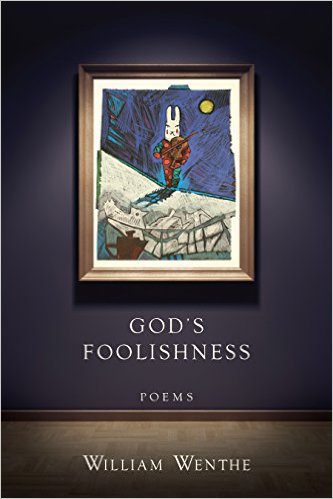
L. S. Phillabaum Award, LSU Press
Helen C. Smith Award for Poetry, Texas Institute of Letters, Finalist
“It might seem a paradox that a book called God’s Foolishness should be so full of Earthly Wisdom, but William Wenthe writes in the fine American tradition of rueful amusement at follies both human and divine. I can’t help but admire his attention to the natural world, his insight into the human condition, and his refusal of easy answers to difficult questions. If you are looking for poetry that is at once urgent and meditative, sorrowful and celebratory, colloquial and learned, well, folks, you’ve found it.”
—Campbell McGrath
“In beautifully modulated austere lyrics and richly ruminative sequences, William Wenthe explores the limits of human knowledge. With clear-eyed wonder he reads the world—tracing the fine line between illusion and revelation, drawn by “some desire we’ve been trained to forget.” His syntax ripples with the vital signs of a mind that takes great pleasure in precision and is cautious of its own joyous abundance: and so his capacious talent for postulating “as if” constructions is tempered by all in the world that is elemental and other. Wenthe is attuned to a birdcall whose source stays hidden, a song whose notes affirm identity while calling identity into question.”
—Phillis Levin
Helen C. Smith Award for Poetry, Texas Institute of Letters, Finalist
Everett Southwest Literary Award
William Wenthe’s third collection begins in the domestic realm then moves outward in subject and place—to a bird market in Paris, the Jaffa Gate in Old Jerusalem, the Chain Bridge in Budapest—before returning to the familial. . . . In well-crafted free verse, traditional meter and rhyme, prose poems, and nonce forms, Wenthe meditates on family, language, art, history, and the natural world, striving to find words to capture the richness of life. (jacket copy)
“Words Before Dawn is a subtle, nuanced collection. Its perceptions and investigations into Auden’s “the happy eachness of all things” combs through the interior and exterior world to offer the reader an extended meditation on existence, language, art, and the art of being. Words Before Dawn applies an acute awareness to the mysteries of the natural world and the often overlooked moments within our lives to discover a great and necessary depth of meaning. The voice in this book speaks with great love for the things of this world, even when they are hidden in shadow and clouded by pain.”
—Brian Turner. Citation for Everett Southwest Literary Award
Natalie Ornish Best Book of Poetry Award, Texas Institute of Letters
“Measured in both tone and pace, many of the finely crafted poems in Not Till We Are Lost address the loss of place, of loves and family, of understanding, of belief. William Wenthe creates from the aftermath of such loss an engaging poetry of beauty, discovery, sustenance, and, as Thoreau suggests, self-knowledge. Transforming emptiness into a language of music and imagery is a wonder of poetry which Wenthe very capably accomplishes.”
—Pattiann Rogers
“The observer in these poems is a complex blend of sophistication and vulnerability. The voice and manner are deeply thoughtful and witty: attentive both to surroundings and to the mind’s strides and leaps. Several of these poems are informed by growing acceptance of great loss; they have a fine precision of emotional energy, balancing humor and sadness with the total equilibrium of a wise man who knows his craft and loves the world.”
—Henry Taylor
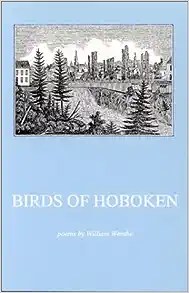
“William Wenthe’s Birds of Hoboken frankly considers the Postmodern assumption that our every view of reality is a construct: “maybe,” he concedes, “we’re invented / by a form— / ‘love’ like syntax / the theorist might say.” And if this volume is rich in ornithological erudition, Nature does not show itself there as the correspondent force of the Romantics but as “a realm inalienably not his own.” The author even allows for “Danger in mediations.” Yet Wenthe simultaneously stresses the half-truth of such trendy vision: rather than merely theorizing presence into absence, indifferent to any loss in the process; rather than adopting deconstruction’s essential nihilism, whereby our “Fictions” (to cite the title of his eloquent final poem) automatically reduce themselves to inconsequence, in his brilliant first collection the writer affirms our capacity to craft crucial aesthetic, social and domestic relations. Indeed, in Birds of Hoboken, craft is supremely and everywhere evident, in all its senses: therefore, to read a poem like “Shadblow,” say, is to see how far from quaint a term like “beautiful” shall remain, so long as the likes of William Wenthe continue to practice.”
—Sydney Lea
“One of the most beautiful, poignant poems one can find in recent volumes is “Shadblow.” It draws a direct parallel between the delicate blooming of a wild-flower, the return in the spring of shad up the river, and getting fired from a technical job at a time when the wife is expecting the birth of a child. All of this is woven so inextricably and inevitably that the last lines come as a hoped for relief: “Ann can walk with you in the woods again— / under a light blanket she holds / a new, delicate, two-note breathing.” . . . The book is highly recommended for those who pride themselves in being a thinking and loving audience.”
—Virginia Quarterly Review
 William Wenthe